
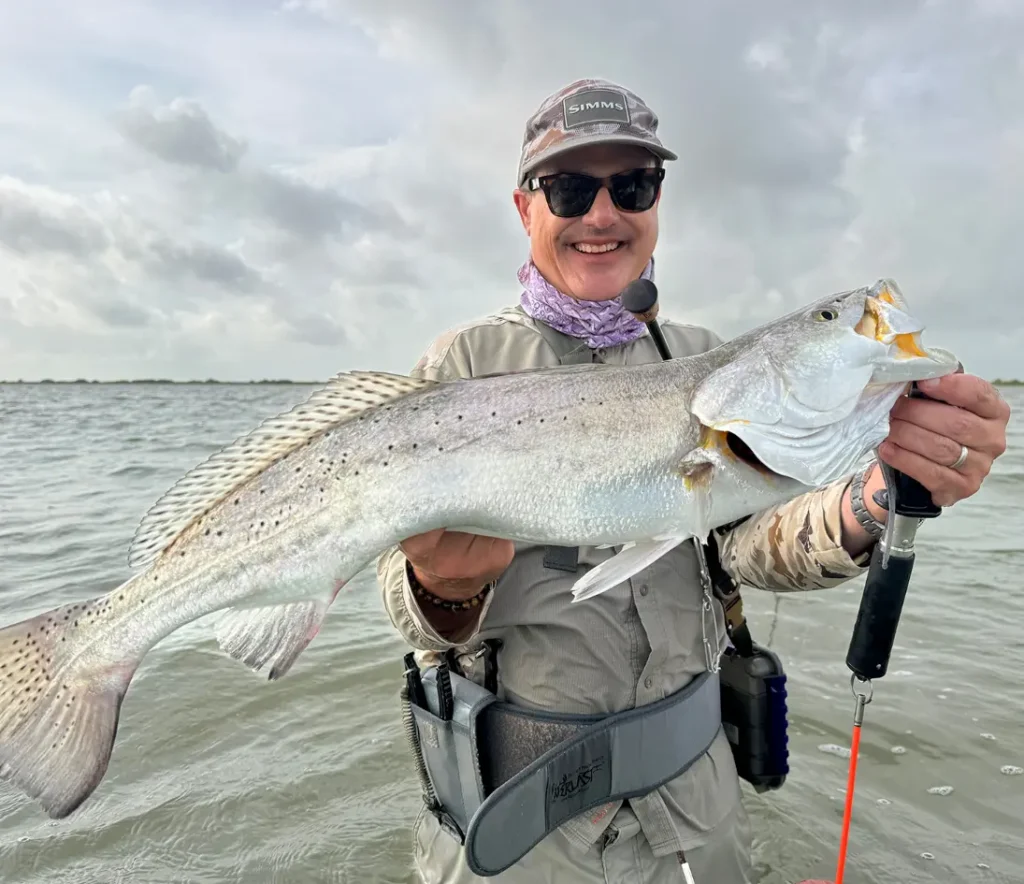
As autumn gives way to winter on South Texas’s legendary Baffin Bay, falling water temperatures, changing bait patterns, and approaching cold fronts create some of the year’s most exciting opportunities to catch a trophy speckled trout on artificial lures.
There is something special about standing waist-deep in the waters of Baffin Bay on a crisp November morning. The summer crowds are gone, the oppressive South Texas heat has finally surrendered, and somewhere beneath the surface, a giant speckled trout is hunting her next meal.
For dedicated trophy trout anglers, November and December signal the beginning of one of the most anticipated seasons of the year. As water temperatures decline, baitfish patterns change, and mature trout begin adjusting their feeding habits in preparation for winter. These changes create tremendous opportunities for anglers willing to leave the boat behind, slip into their waders, and patiently work artificial lures through some of the most productive trophy trout habitat on the Texas coast.
Baffin Bay has earned its reputation as a premier trophy trout destination. Its combination of shallow grass flats, muddy bottoms, scattered sand pockets, deeper guts, and legendary serpulid rock formations provides the structure and forage necessary to produce exceptional speckled trout.
But catching one of Baffin’s true giants requires more than simply being in the right bay. Success comes from understanding seasonal movements, identifying productive habitat, selecting the right lure, and knowing when to slow down.
November is a month of change. Early in the month, Baffin Bay often continues to experience relatively warm conditions, with trout feeding aggressively across shallow grass flats and shorelines. As stronger cold fronts begin pushing through South Texas, water temperatures drop, and fish gradually adjust their locations and feeding patterns..
While deeper water provides refuge during significant temperature drops, trophy trout frequently return to shallow flats when conditions stabilize. A warming trend, particularly after several days of cold weather, can draw large females into surprisingly shallow water to feed.
The key is finding areas that offer easy access between shallow feeding grounds and nearby deeper water. Look for flats with a mixture of grass and mud, scattered sand potholes, and subtle changes in bottom contour. Shorelines with gradual drop-offs into deeper guts can be particularly productive.
Pay close attention to baitfish. Schools of mullet moving slowly across a flat, occasional surface disturbances, or nervous bait hugging the shoreline can signal the presence of feeding predators. One nervous mullet in the right location can be more valuable than an entire shoreline of seemingly perfect structure.
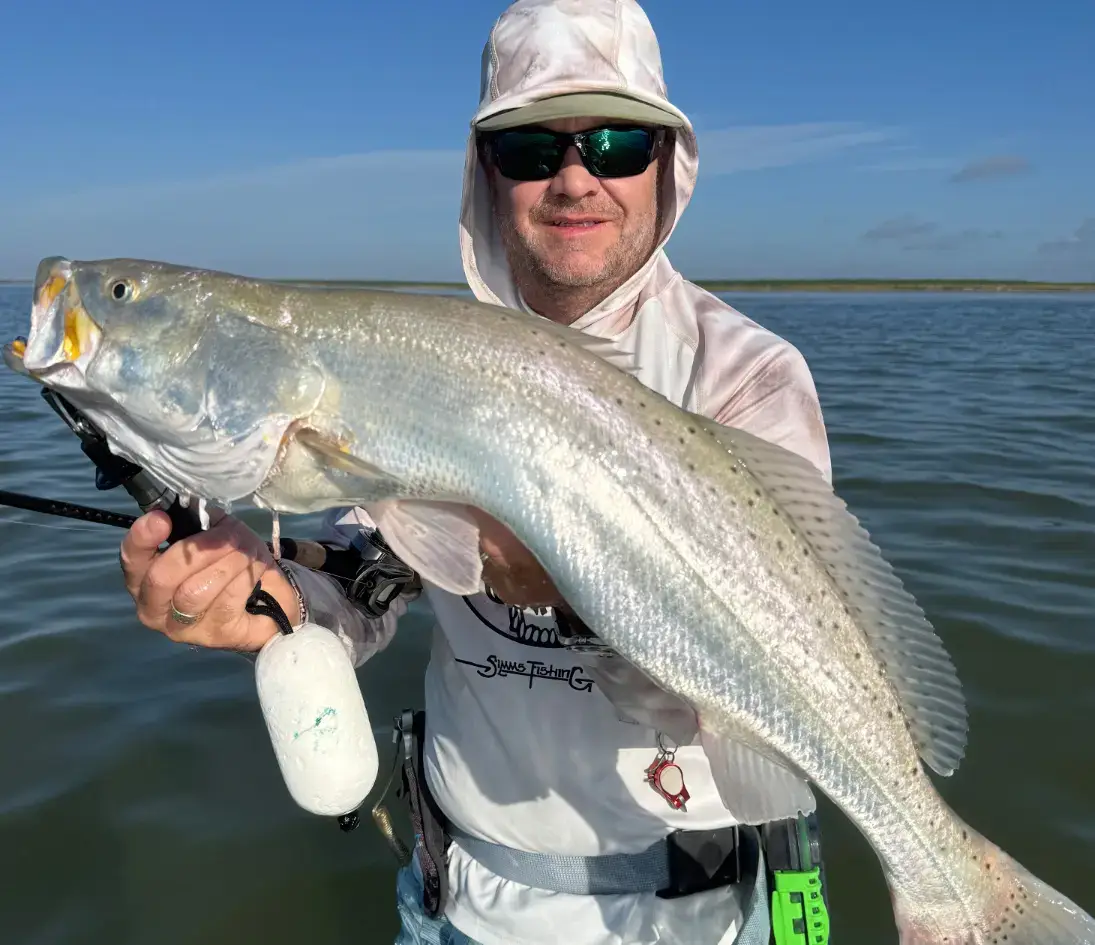
By December, stronger northers and shorter days begin to influence the entire bay system. Cold fronts can cause dramatic changes in water temperature, wind direction, water clarity, and water levels. These conditions demand flexibility.
Immediately following a strong front, trout may become less aggressive and seek more stable conditions near deeper guts, channel edges, and protected areas. However, as sunshine returns and shallow bottoms begin absorbing warmth, feeding opportunities can improve dramatically..
December trout may not feed continuously throughout the day. Instead, anglers often encounter relatively short windows of activity. Understanding those feeding windows is critical. A slow morning does not necessarily mean the fish are absent. Sometimes the difference between an empty string of casts and the fish of a lifetime is simply staying in the right area long enough for conditions to change.
Artificial lure fishing is especially rewarding during late fall and early winter because anglers can control presentation speed, depth, and movement. Three lure categories deserve a permanent place in every serious Baffin Bay wade fisherman’s tackle box.
Soft plastics are among the most versatile options. Four- to six-inch straight tails can be worked effectively across grass flats, sand pockets, and deeper edges. Light jigheads, generally 1/32 to 1/16 ounce, help maintain a slower presentation when water depth and wind permit. Natural colors such as pearl, bone, and silver work well in clear water, while darker shades like plum and dark purple provide a stronger silhouette when visibility decreases.
Slow-sinking twitchbaits, including Corky-style lures, become particularly effective as temperatures decline. These baits imitate an injured or struggling mullet and can remain in a trout’s strike zone longer than faster-moving lures. A successful retrieve often consists of two gentle twitches followed by a long pause. During colder conditions, that pause may be the most important part of the presentation.
The north shoreline, protected coves, and flats with scattered structure can all provide excellent opportunities under the right conditions. When selecting a wading location, consider the wind direction, recent water temperatures, available bait, and proximity to deeper water.
A productive flat may hold fish in knee-deep water during a warming afternoon and along the adjacent drop-off following the next cold front. A good strategy is to begin on the deeper edge, work methodically toward the shallows, and allow the fish to reveal their preferred depth.
Once you locate a strike or see signs of active trout, slow down and thoroughly work the surrounding water. Big trout are not always traveling in large schools. Sometimes a single fish is the only opportunity an angler gets all morning.
Perhaps the most important lesson in trophy trout fishing is learning to slow down. Big trout are efficient predators. During cooler months, they may be reluctant to chase a lure moving quickly through the water column.
Make long casts, minimize unnecessary movement, and thoroughly cover promising areas before moving on. When fishing soft plastics, allow the lure to settle close to the bottom before beginning a slow retrieve with occasional gentle lifts. With suspending or slow-sinking baits, experiment with longer pauses until the fish indicate what they prefer.
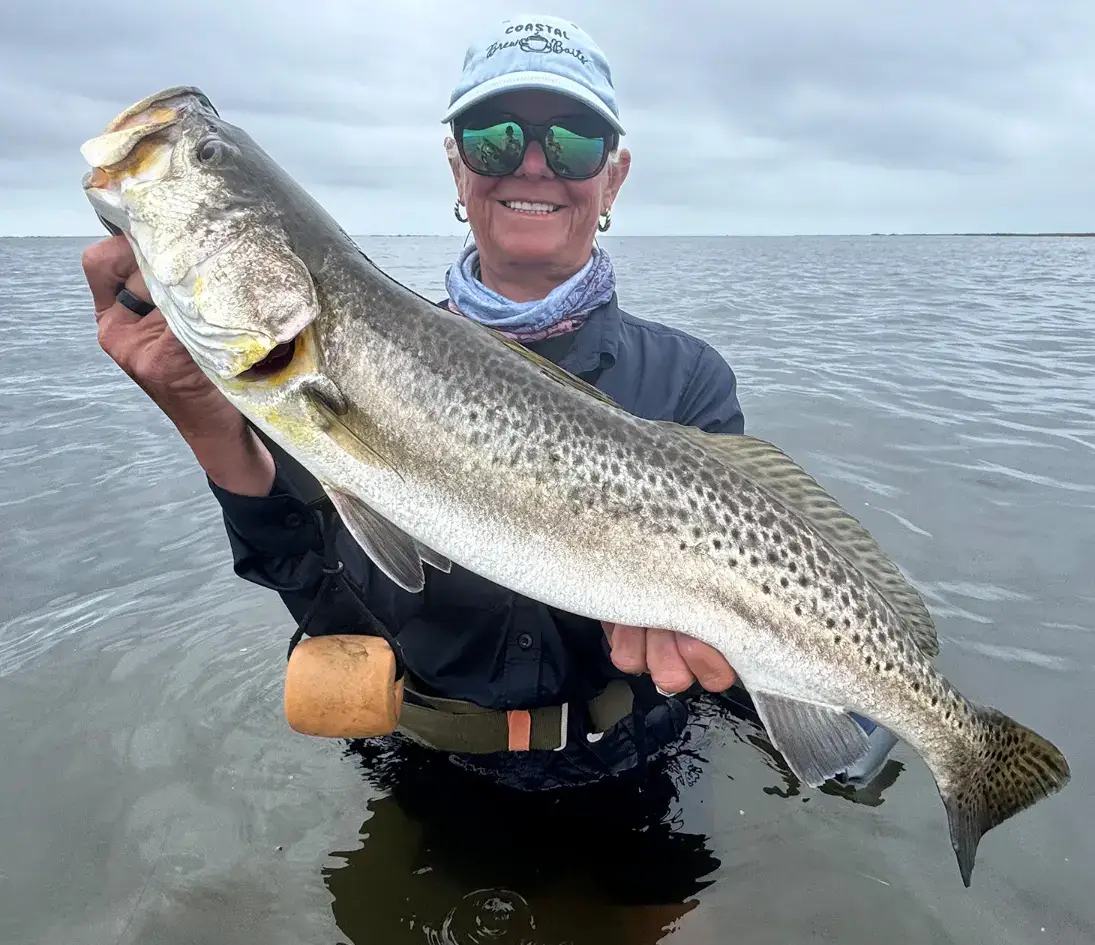
A healthy population of mature female trout is essential to the future of this remarkable fishery. Handle large fish carefully and minimize time out of the water. Photograph your trophy quickly and release her gently whenever possible.
There is no shortcut to consistently catching trophy trout. Success is built on observation, patience, experience, and an understanding of how these remarkable predators respond to changing conditions.
November and December offer some of the finest opportunities of the year to target exceptional speckled trout on Baffin Bay. The reward may come on a cold, quiet morning when expectations are fading, or during a warm afternoon when mullet suddenly begin moving across a shallow flat.
Either way, there is nothing quite like feeling the unmistakable weight of a giant trout at the end of your line. And when that fish finally rolls beside you, revealing a broad spotted back and massive yellow mouth, every cold morning, every long wade, and every patient cast becomes worthwhile.
Because on Baffin Bay, the next cast could always be the fish of a lifetime.
Capt. Sally Black
Professional Fishing and Hunting Guide since 1998
361-205-0624
Sally@CaptainSally.com
www. CaptainSally.com
Facebook: Captain Sally’s Baffin Bay Fishing and Hunting
Facebook: Sally Ann Black
Instagram: Captain Sally’s Fishing and Hunting
